If you picture Peninsula living as a choice between busy downtown convenience and quiet residential streets, Portola Valley offers something different. Here, daily life is shaped by open space, scenic roads, trails, and a planning approach that intentionally protects a rural feel. If you are wondering whether that lifestyle fits the way you want to live, this guide will help you understand what makes Portola Valley distinct. Let’s dive in.
Portola Valley Has a Quiet, Rural Feel
Portola Valley is intentionally low density, and that is a big part of its identity. According to the town’s history page, it incorporated in 1964 to preserve its rural ambiance, foster low-density housing, and limit services to those needed by local residents.
That long-term vision still shapes the town today. The town reports roughly 4,500 residents, about 1,700 households, and 1,900 acres of permanent open space, which helps explain why Portola Valley feels more tucked into the landscape than built up around it.
The same priorities appear in the town’s General Plan, which focuses on open space, recreation, housing, trails and paths, scenic roads and highways, conservation, noise, sustainability, and safety. In practical terms, that means tranquility and scenic preservation are not just talking points. They are built into how the town plans for the future.
Scenic Roads Shape Daily Life
One of the clearest signs of Portola Valley’s character is how it treats its roads. In the town’s scenic-roads policies, Alpine Road above Ciervos Road is designated as a recreation route restricted to horses, bicycles, pedestrians, and emergency vehicles.
Even Portola Road, described as the town’s most urban scenic roadway, is still expected to preserve natural rural beauty. That tells you a lot about the day-to-day atmosphere. The setting feels more pastoral and protected than what many buyers expect from a typical suburban Peninsula community.
Outdoor Access Is Part of Everyday Living
If you love being outside, Portola Valley stands out. The town says it has nearly the same number of miles of trails as roads, with 35 miles of streets and 36 miles of trails.
That trail network is not just for weekend recreation. It was built to support walking and riding, and the town even provides a safe-routes-to-school map that connects schools, Town Center, and Ford Field without requiring a car.
This kind of access can change how a place feels to live in. Instead of needing to plan an outing around traffic and parking, you may find that a walk, ride, or quick loop on a trail is simply part of the rhythm of the day.
Nearby Open Space Expands Your Options
Portola Valley’s outdoor lifestyle extends beyond town-maintained trails. Nearby preserves offer quick access to larger natural areas for hiking, biking on designated trails, and equestrian use.
At Windy Hill Open Space Preserve, the lower parking area is on Portola Road, with overflow parking at Town Center. The preserve supports several types of outdoor use, making it a well-known option for residents who want an easy nature escape close to home.
Other nearby options include Skyline Ridge, with Alpine Pond, Horseshoe Lake, and family-friendly loops, as well as Spring Down Open Space near Town Center with a short trail, meadow, and pond setting. Together, these resources make open space feel less like an amenity and more like a defining part of the Portola Valley lifestyle.
Open Space Is a Long-Term Priority
This outdoor emphasis is also reinforced by local policy. The town’s Open Space Committee states that its fund exists to acquire, preserve, and enhance open space with the goal of retaining rural qualities and balancing development.
For buyers, that matters. It suggests that the landscape and low-key environment are not accidental features that could easily shift. They are part of the town’s governing priorities.
Community Life Feels Local and Participatory
Portola Valley may be quiet, but it is not inactive. The town’s community page highlights volunteer committees that sponsor hikes, picnics, music recitals, art exhibits, speakers’ evenings, book signings, and theater performances.
Classes and athletic events also take place almost year-round at Town Center and in local parks and recreation facilities. That creates a community rhythm centered more on local participation and shared events than on commercial activity.
If you prefer a place where community life happens through town programs, volunteer energy, and small-scale gatherings, Portola Valley has a strong pull. It feels more neighbor-driven than retail-driven.
Town Center Is the Main Hub
Portola Valley does not have a large traditional downtown. Instead, the Town Center functions as the civic heart of town, with the library, Community Hall, playing fields, Town Hall, maintenance facilities, and the Historic Schoolhouse.
That setup shapes daily life in an important way. The center of town is more about civic use, recreation, and community events than about shopping, dining, or nightlife.
For many residents, that is part of the appeal. It keeps the town focused on local connection and open space rather than a busier commercial identity.
Shopping and Dining Are Limited In Town
When you live in Portola Valley, you should expect convenience rather than variety when it comes to local errands. The town’s planning documents state that the two in-town shopping and service centers are intended to meet the most frequently recurring needs of residents, while specialized goods and services are expected to be sought in larger Midpeninsula or Bay Area centers.
In plain terms, Portola Valley is not the kind of place where you step out to a dense cluster of restaurants, boutiques, and everyday retail. Your local options are more limited, and many errands or dining outings may take you to nearby Peninsula communities.
That said, there are still a few recognizable local anchors. The town has an active Alpine Inn project page, reflecting the restaurant’s ongoing role as a notable local landmark.
Commuting Tends To Be Car-Oriented
For commuters, Portola Valley is generally more car-dependent than transit-first. SamTrans Route 85 and related local routes in Portola Valley are school-oriented services rather than broad all-day commuter lines.
Caltrain access is available through nearby stations such as Redwood City, Menlo Park, and Palo Alto, but reaching those stations usually requires a drive or bike ride. If easy walk-to-transit access is one of your top priorities, Portola Valley may feel less convenient than more urban Peninsula locations.
For many buyers, this is simply a tradeoff. You are choosing privacy, landscape, and a quieter pace over a denser, more transit-connected environment.
Homes Blend Into the Landscape
Portola Valley’s housing pattern also stands apart. The town’s zoning map shows a residential structure centered on estate, single-family, and mountainous residential districts, along with open-area and specialized districts.
The result is a housing environment that tends to feel less like a uniform neighborhood and more like individually sited homes shaped by topography, trees, and open land. That physical layout supports the privacy and low-density character many buyers associate with the area.
Design Review Protects Visual Character
Portola Valley puts real emphasis on preserving how the town looks and feels. The Architectural & Site Control Commission reviews many plans to help prevent excessive grading, indiscriminate clearing, and damage to trees and shrubbery.
The town’s landscape and design guidance also calls for preserving the natural environment through native materials, blended transitions to adjacent open areas, and minimizing disturbance to natural terrain and vegetation. Town planning materials further state that buildings and structures should remain subservient to the natural landscape in design, materials, and color.
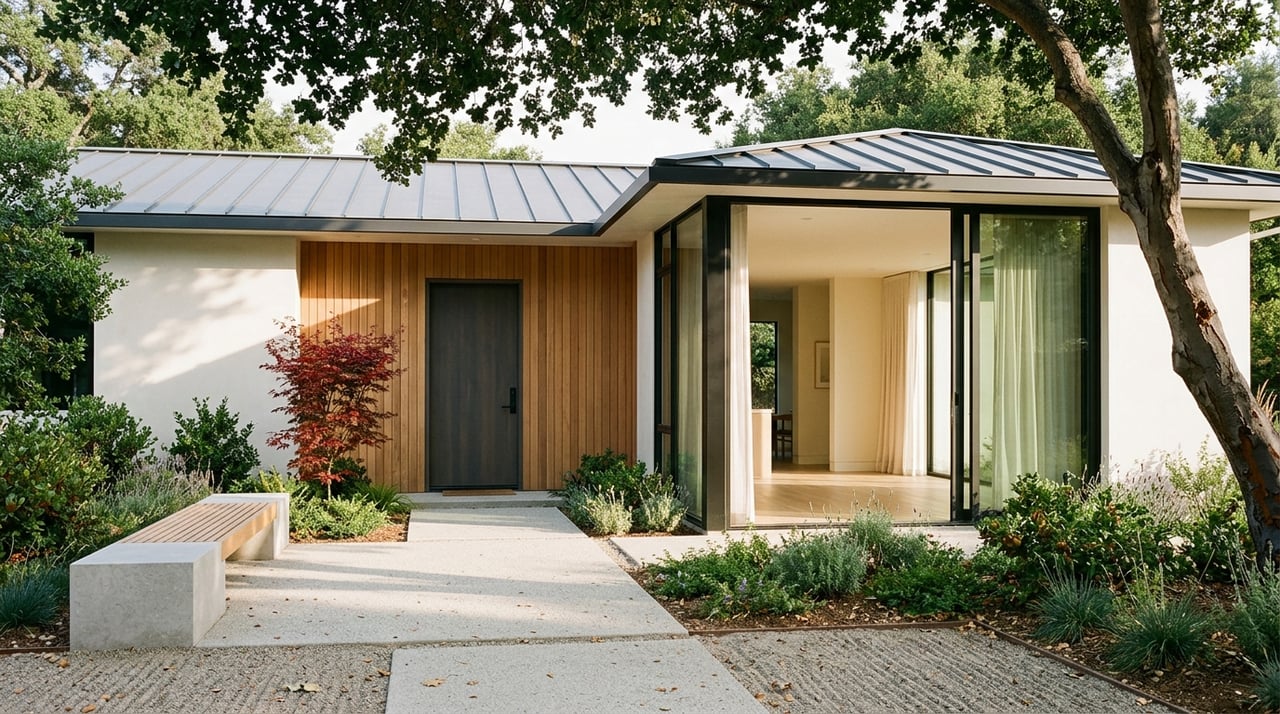
That approach has a noticeable effect. Homes in Portola Valley often feel integrated into their setting rather than dominating it.
Large Lots Influence the Lifestyle
Town materials describe Portola Valley as being made up primarily of single-family homes on larger lots. The current housing planning framework also points to only a limited number of targeted mixed-use high-density sites, suggesting that any future densification is selective rather than widespread.
From a lifestyle perspective, this tends to support buyers who value privacy, space, and a quieter residential rhythm. If you want a setting where the land and home placement matter as much as the house itself, Portola Valley may feel especially compelling.
Who Portola Valley May Suit Best
Portola Valley often appeals to buyers who want a calm, open-space-oriented lifestyle on the Mid-Peninsula. You may find it especially attractive if you value:
- Trail access and outdoor recreation close to home
- A quiet, low-density setting
- Larger residential lots and more privacy
- A civic and community-centered town identity
- Scenic surroundings and strong landscape preservation
It may be a less natural fit if your ideal lifestyle depends on a lively downtown, frequent walkable errands, or a transit-first commute. Those are not flaws so much as defining tradeoffs that come with the town’s intentional planning choices.
If you are considering a move in or around Portola Valley, working with a local advisor can help you compare these lifestyle factors with nearby communities and find the right fit for your goals. If you want thoughtful guidance on Portola Valley and the Mid-Peninsula market, Hummingbird Homes offers a calm, strategic approach tailored to the way you want to live.
FAQs
What is daily life like in Portola Valley?
- Daily life in Portola Valley is generally quiet, low density, and closely tied to open space, trails, community events, and a rural residential setting.
Is Portola Valley walkable for shopping and errands?
- Portola Valley offers limited in-town convenience services, but it does not function like a traditional walkable downtown with a broad mix of shops and restaurants.
What outdoor activities are common in Portola Valley?
- Walking, hiking, biking on designated trails, horseback riding, and visits to nearby open space preserves are common parts of the local lifestyle.
Is Portola Valley good for commuters?
- Portola Valley is typically more car-oriented than transit-oriented, with nearby Caltrain stations in other Peninsula cities and local SamTrans service focused largely on school routes.
What are homes like in Portola Valley?
- Homes in Portola Valley are primarily single-family residences, often on larger lots, with design review and planning policies that aim to preserve the natural landscape and visual character.
What makes Portola Valley different from other Peninsula towns?
- Portola Valley stands out for its deliberate commitment to rural character, open-space preservation, trail access, limited commercial development, and community-centered civic life.